Beyond Perception: The Boltzmann Brain's Existential Dilemma
Imagine a fleeting moment of consciousness, a complete universe of memories, sensations, and perceptions, all springing into existence spontaneously out of an empty void. You believe you have a past, a body, and a world, yet in this terrifying scenario, none of it is real. This is the unsettling premise of the Cerebro De Boltzmann – the Boltzmann Brain – a mind-bending thought experiment that challenges the very foundations of our reality.
Far from being mere science fiction, the concept of the Cerebro De Boltzmann emerges from the rigorous world of physics and has profound implications for philosophy and cosmology. It forces us to confront uncomfortable questions: Can we truly trust our perceptions? What constitutes "reality"? And could our entire existence be nothing more than an improbable cosmic accident?
Unpacking the Cerebro De Boltzmann: A Cosmic Coincidence?
At its heart, the Cerebro De Boltzmann is an isolated, conscious entity that materializes instantaneously from the vacuum, complete with a full set of false memories and perceptions of a non-existent world. It is, quite literally, a brain that fluctuates into being, convinced of a reality that has no basis outside its own transient existence. It's a vivid, but profoundly disturbing, illustration of how our perceived reality could be nothing more than an ephemeral statistical blip.
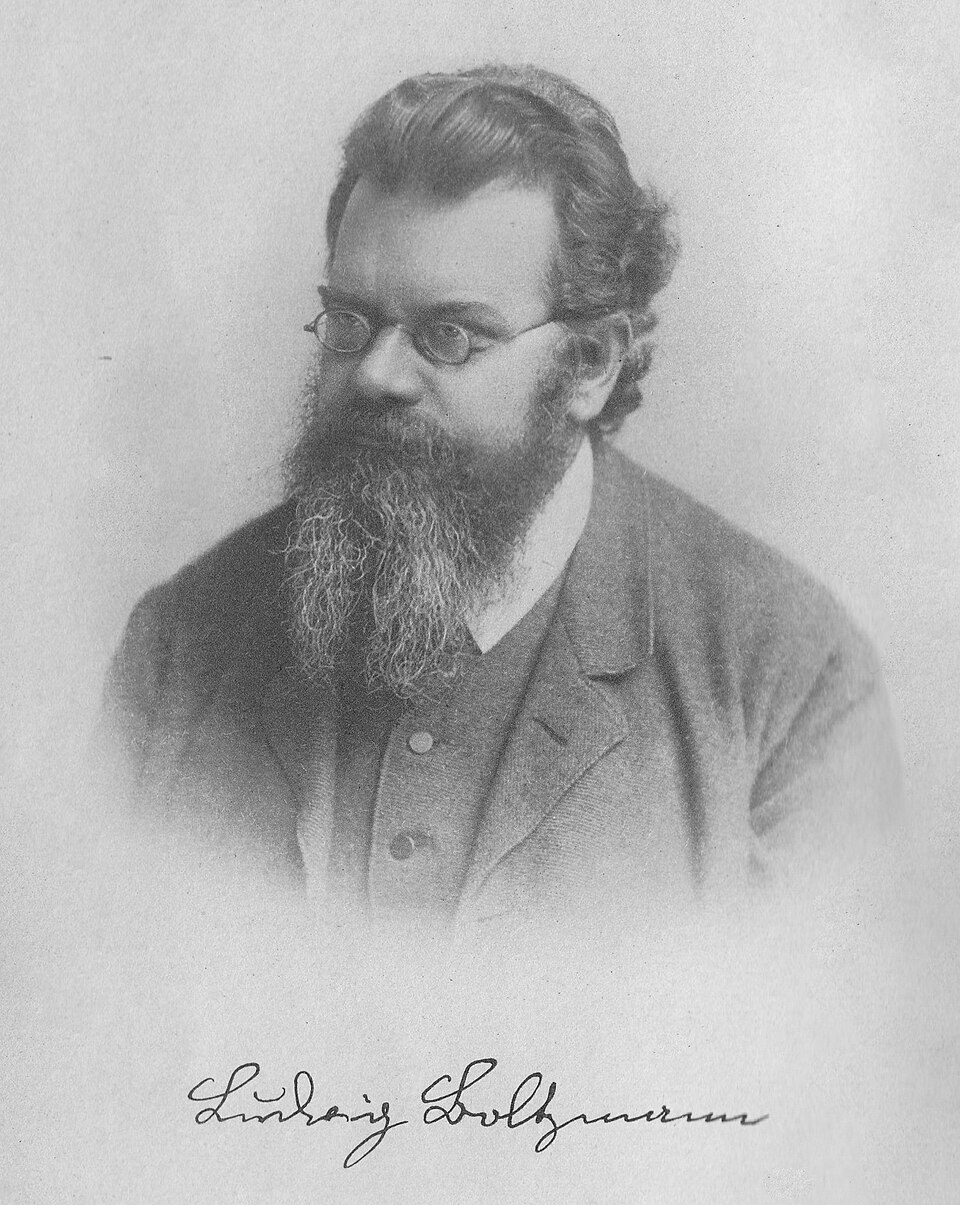
The genesis of this idea traces back to the work of Austrian physicist Ludwig Boltzmann (1844-1906), a pioneer of statistical mechanics. Boltzmann wrestled with the second law of thermodynamics, which states that the entropy (disorder) of a closed system always tends to increase. If the universe should tend towards maximum chaos, why do we observe such remarkable order – galaxies, stars, planets, and even life?
Boltzmann's audacious answer was that the universe, in its entirety, might indeed be in a state of maximum entropy – a vast, featureless void. What we perceive as our ordered cosmos might simply be a vastly improbable, temporary statistical fluctuation, an "accident" of order within an infinitely chaotic backdrop. Think of it like a deck of cards that, through sheer random shuffling, briefly arranges itself into a perfectly ordered sequence before returning to disorder. This 'ordered patch' is our universe.
From Cosmic Fluctuations to Spontaneous Consciousness
If an entire ordered universe could arise from a statistical fluctuation, albeit an incredibly improbable one, then why not something much simpler? This is where the Cerebro De Boltzmann enters the fray. The argument is that while the probability of a *stable, complex, and evolving universe* like ours arising from a random fluctuation is astronomically small, the probability of a *single, conscious brain* with false memories arising spontaneously might, in certain cosmological models, be even higher.
To grasp this counter-intuitive concept, consider the analogy provided by probability theory. Imagine the air molecules in your room. There's a non-zero, though astronomically tiny, probability that all those molecules could spontaneously converge in one corner, leaving you to suffocate in a vacuum. No law of physics strictly forbids it, despite its practical impossibility. Similarly, you could imagine a puddle of water spontaneously freezing into an ice cube due to random molecular motion, defying the surrounding temperature.
The Cerebro De Boltzmann is an extrapolation of this principle to an extreme degree. In a vast, empty universe, given enough time (and in some cosmological models, infinite time), virtually any configuration of matter, no matter how complex, might eventually occur through random fluctuation. And among these fluctuations, a brain, complete with neural patterns representing memories and perceptions, could theoretically pop into existence for a brief moment. This makes the Cerebro De Boltzmann a truly mind-bending possibility.
The Existential Quandary: Challenging Our Reality
The Cerebro De Boltzmann isn't just a quirky thought experiment; it presents a profound philosophical paradox. If, under certain cosmological models, it is statistically more probable for isolated brains with false memories to spontaneously appear than for an entire, stable, conscious universe with actual observers like us, how can we be sure we aren't just one of those fleeting Boltzmann Brains? This question strikes at the core of our understanding of existence:
- Philosophy of Mind: What truly defines "being real" or "conscious"? If our memories are merely fabricated neural patterns, does it diminish the reality of our experience?
- Epistemology: Can we trust our senses, our memories, or our understanding of the past? If everything could be an illusion, what basis do we have for knowledge?
- Cosmology: This is where the paradox becomes a crucial scientific tool. If a proposed model of the universe predicts that Boltzmann Brains vastly outnumber genuine observers, it suggests a fundamental flaw in that model. Our observed reality, with its long history and consistent laws, should be the most probable outcome, not the least. For a deeper dive into this conundrum, you might find our article The Boltzmann Brain: Is Your Reality Just a Cosmic Illusion? particularly insightful.
The dilemma is brutal because it forces us to question the very fabric of our subjective experience. The intricate tapestry of our lives, our relationships, our achievements, could all be a grand cosmic hallucination, born from the ultimate random event.
Science's Stance: A Test, Not a Threat
Despite the unsettling nature of the Cerebro De Boltzmann, the vast majority of physicists and cosmologists do not believe that we are, in fact, Boltzmann Brains. Instead, this idea serves a critical function as a "coherence test" or an "alarm bell" for scientific theories. If a cosmological model, particularly those dealing with eternal inflation or the distant future of the universe, predicts a greater number of Boltzmann Brains than actual, naturally evolved observers, then that model is generally considered problematic and likely flawed.
In essence, the Cerebro De Boltzmann acts as a filter. It helps scientists weed out models that, while mathematically plausible, lead to absurd or non-observable conclusions. Our observed reality, which includes a universe with a clear history, consistent physical laws, and the evolution of complex life, is what we actually experience. Any valid cosmological theory must be able to explain this reality without resorting to an overwhelming probability of random, illusory brains. For more on this scientific utility, see our related article: Boltzmann Brain: Why Scientists Use It to Test Reality.
This approach underscores the scientific method's commitment to empirical evidence and logical consistency. While entertaining extreme possibilities, science ultimately seeks to describe the world as it *is*, not as it could be through improbable statistical anomalies.
Embracing the Improbable: What the Boltzmann Brain Teaches Us
While the notion of the Cerebro De Boltzmann is unlikely to be our reality, it offers valuable philosophical insights. It reminds us of the profound fragility of our understanding and the importance of critical inquiry:
- Appreciate Complexity: Our existence as stable, conscious beings within an ordered universe is an extraordinary, highly improbable outcome that deserves appreciation and study.
- Value Shared Reality: The consistency of our shared perceptions and memories with others reinforces the idea of an objective, external reality, offering comfort against the solitude of a Boltzmann Brain.
- Stay Curious: The paradox encourages us to constantly question, explore, and refine our cosmological models, pushing the boundaries of human knowledge.
The Cerebro De Boltzmann is more than just a theoretical curiosity; it's a powerful reminder that even our most fundamental certainties – memory, perception, and the very concept of reality – are more intricate and potentially fragile than we often imagine. It stands as a testament to the wild possibilities inherent in physics and a safeguard against theories that might otherwise lead us astray. So, are you a genuine observer in a vast, evolving cosmos, or merely a fleeting Cerebro De Boltzmann reading an illusionary article? The beauty and terror lie in the question itself.