The Boltzmann Brain: Is Your Reality Just a Cosmic Illusion?
Imagine, for a moment, that your entire existence – every memory, every sensation, every moment of your perceived reality – is nothing more than a fleeting, spontaneous burst of consciousness in an otherwise empty cosmos. No past, no physical body, no universe beyond the immediate illusion. This mind-bending concept is known as the Boltzmann Brain, or in Spanish, the intriguing **Cerebro De Boltzmann**. It's an idea that blurs the lines between physics, philosophy, and the wildest reaches of science fiction, challenging our most fundamental assumptions about what it means to be real.
At its core, the Boltzmann Brain hypothesis suggests that our intricate, ordered reality might be just a random statistical fluctuation, an incredibly improbable accident. If such a fluctuation can create an entire universe, what's to stop it from creating something simpler, yet equally complex in its subjective experience – a solitary, disembodied brain, fully convinced of a reality that doesn't exist?
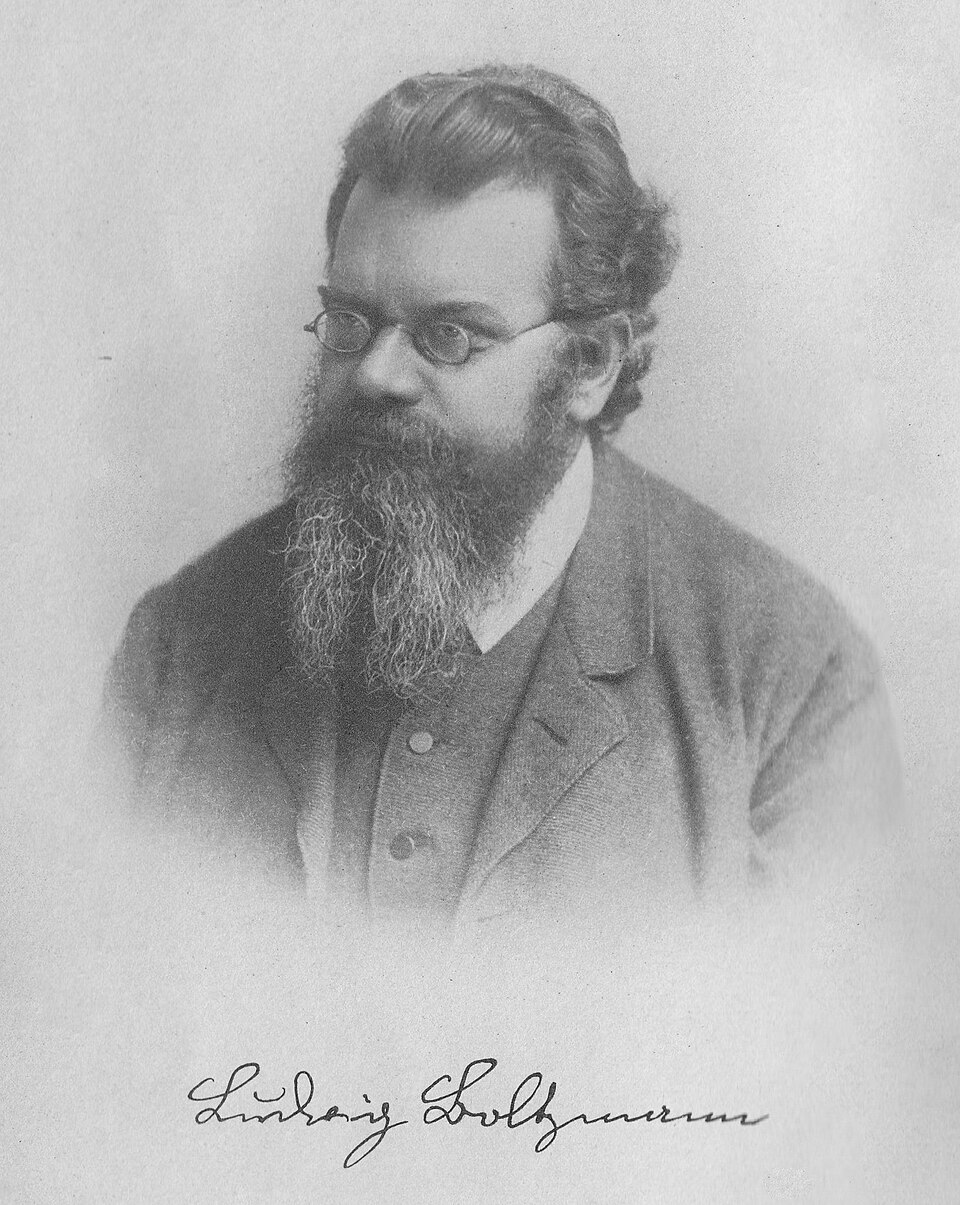
The Accidental Genius Behind the Cosmic Fluctuation: Ludwig Boltzmann
To truly grasp the unsettling nature of the Boltzmann Brain, we must journey back to the late 19th and early 20th centuries, to the work of Austrian physicist Ludwig Boltzmann (1844-1906). A pioneer in statistical mechanics, Boltzmann wrestled with a profound paradox: if the Second Law of Thermodynamics dictates that the universe should naturally tend towards increasing disorder and chaos (entropy), why do we observe such remarkable order and complexity around us? From the intricate structure of galaxies to the delicate balance of ecosystems, the universe seems anything but chaotic.
Boltzmann's audacious solution was revolutionary for its time: perhaps the universe, in its grand totality, *is* predominantly a vast, chaotic expanse of high entropy. What we perceive as an ordered cosmos, capable of sustaining life and complex consciousness, might simply be an extremely rare, temporary statistical fluctuation – a brief "accident" of order emerging from an eternal sea of disorder.
To put this into perspective, consider a room full of air molecules. While it's astronomically improbable, it's not physically impossible for all those molecules to spontaneously move to one side of the room, leaving a vacuum where you stand. Or imagine a still puddle of water, where against all odds, a small block of ice suddenly forms in the middle. These events are ludicrously unlikely, yet technically not forbidden by the laws of physics. Boltzmann applied this principle on a cosmic scale, suggesting that our universe's existence could be a similar, albeit far grander, statistical fluke.
From Cosmic Order to Isolated Minds: The Birth of the Boltzmann Brain
If the emergence of an entire, complex universe can be explained as a statistical fluctuation, then the leap to the **Cerebro De Boltzmann** becomes eerily logical. Why would the universe "bother" to create billions of years of cosmic evolution, countless stars, planets, and life forms, if a conscious observer could arise much more simply?
This is where the idea becomes truly chilling: a Boltzmann Brain is a self-aware entity, a mind complete with simulated memories, perceptions, and a coherent sense of identity, that spontaneously and randomly materializes from the vacuum of space. It's a fleeting neural network, perhaps just a few neurons firing in just the right way, that momentarily creates the *experience* of a lived reality. This brain believes it has a past, a body, and a world around it, when in truth, it has none of these things. It's a momentary flicker, a transient burst of illusion that quickly dissipates back into the cosmic void.
The sheer improbability of a complex brain arising fully formed, complete with intricate neural connections and stored information, is staggering. Yet, in an infinitely vast or eternal universe, even events with incredibly low probabilities are bound to occur, given enough time and space. The unsettling thought is that if *any* kind of consciousness can spontaneously arise, it might be vastly more probable for a bare minimum, isolated consciousness (a Boltzmann Brain) to appear than for the intricate chain of events that led to observers like us.
The Existential Ripple: Philosophical and Scientific Dilemmas
The Boltzmann Brain isn't just a quirky scientific thought experiment; it's a potent philosophical paradox that strikes at the very foundations of our existence and knowledge.
From a **philosophical perspective**, the **Cerebro De Boltzmann** poses profound questions:
- Philosophy of Mind: What constitutes "reality" if our perceptions and memories can be entirely illusory? What is consciousness, if it can arise without a physical history or an external world?
- Epistemology: How can we trust our senses or our memories if they might be fabricated by a random fluctuation? How do we differentiate between a genuine experience and a convincing hallucination generated by cosmic chance? This dilemma forces us to scrutinize the very basis of our knowledge and certainty. Beyond Perception: The Boltzmann Brain's Existential Dilemma explores this existential tightrope walk in greater detail.
- Existentialism: The idea reminds us of the profound fragility of our perceived existence, compelling us to ponder the significance of our lives if they could be nothing more than a cosmic accident.
Scientifically, particularly in **cosmology**, the Boltzmann Brain serves as a crucial "sanity check" for theoretical models of the universe. This is where the paradox becomes a practical tool:
- The Paradoxical Prediction: If certain cosmological models (especially those involving eternal inflation or a multiverse) predict that it's vastly more likely for a Boltzmann Brain to spontaneously appear than for an "authentic" observer (like a human, product of billions of years of evolution) to exist, then those models are considered to be in serious trouble.
- A Theoretical Alarm Bell: Most modern physicists view the Boltzmann Brain as a diagnostic tool. If a theory of the universe generates a scenario where these solitary, illusory consciousnesses outnumber "real" observers, it signals a fundamental flaw in the theory. It's an internal inconsistency that suggests the model diverges too far from our observed reality. In essence, the Boltzmann Brain acts as an Boltzmann Brain: Why Scientists Use It to Test Reality.
Thus, while most scientists do not believe we are Boltzmann Brains, the concept actively guides their research, pushing them to formulate theories that predict a universe where evolved observers are the norm, not the statistical anomaly.
Embracing the Mystery: What the Boltzmann Brain Teaches Us
While the thought of being a fleeting **Cerebro De Boltzmann** might induce a shiver, this fascinating hypothesis offers valuable insights. It's a stark reminder of the limitations of our current understanding of the cosmos and consciousness.
1.
The Value of Skepticism: The Boltzmann Brain encourages us to be critical thinkers, to question our assumptions, and to continually seek deeper understanding of reality, even if the answers are elusive.
2.
Refining Cosmic Theories: For physicists, it's a powerful criterion for evaluating the robustness of cosmological models. Any viable theory of the universe must consistently predict that "real" observers are far more numerous than their illusory counterparts.
3.
Appreciating Our Reality: If our existence as evolved, embodied beings in a complex, seemingly real universe is indeed an incredibly improbable occurrence (as opposed to being a mere Boltzmann Brain), then it makes our lives, our connections, and our experiences all the more precious and remarkable.
The Boltzmann Brain is not just an intellectual caprice; it's a profound thought experiment that keeps us humble in the face of the universe's vastness and strangeness. It pushes the boundaries of what we consider possible, compelling us to confront the deepest mysteries of existence.
Conclusion
The concept of the Boltzmann Brain – the notion that your entire reality could be a spontaneous, disembodied illusion – serves as a powerful testament to the intricate dance between physics, philosophy, and our quest for meaning. From Ludwig Boltzmann's audacious ideas about entropy and cosmic fluctuations, we arrive at a scenario that challenges our most basic certainties: memory, perception, and the very fabric of existence. While most scientists firmly believe we are not fleeting Cerebro De Boltzmann, the hypothesis remains an indispensable tool for scrutinizing cosmological models and prompting profound existential reflection. So, is your reality robustly real, or just a beautiful, fleeting cosmic dream? The question itself is a testament to the profound ideas sparked by the **Cerebro De Boltzmann**.