The Curious Case of the Cerebro De Boltzmann: A Cosmic Coincidence?
Imagine a universe where your entire existence – your memories, your perceptions, the very ground beneath your feet – is nothing more than a fleeting, spontaneous illusion. This mind-bending concept is the Cerebro De Boltzmann, or Boltzmann Brain, a theoretical construct blurring physics, philosophy, and unsettling science fiction. While seemingly an impossible nightmare, this perplexing idea serves a vital role in modern cosmology: it's a powerful tool scientists use to test the very fabric of our understanding of reality.
At its core, the Boltzmann Brain hypothesis posits that a conscious entity, complete with false memories of a life and a world that never truly existed, could spontaneously manifest from a random fluctuation in a chaotic universe. Picture a single brain, fully formed and sentient, appearing in the vast cosmic void for a microsecond, convinced it has a past, a body, and a complex environment. These profound implications challenge our most fundamental assumptions about existence, memory, and the universe itself.
The Seeds of Chaos: Ludwig Boltzmann and Entropy
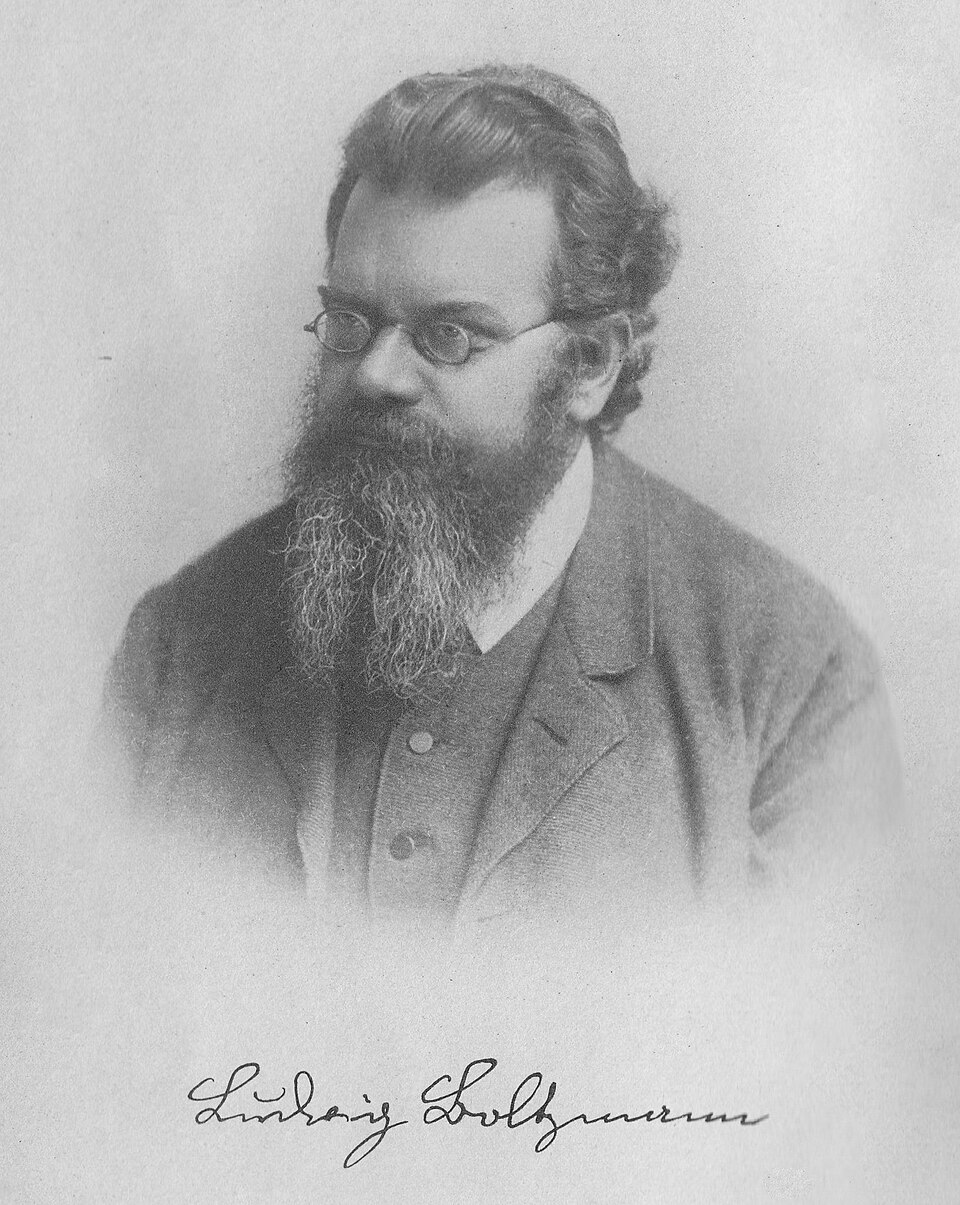
The Boltzmann Brain concept originates from the profound insights of Ludwig Boltzmann (1844-1906), an Austrian physicist and pioneer of statistical mechanics. Boltzmann sought to understand the perplexing relationship between universal order and disorder, especially given the Second Law of Thermodynamics, which dictates that entropy—or disorder—in a closed system always increases. Simply put, everything in the universe naturally tends towards maximum chaos.
This fundamental law presented a significant paradox for Boltzmann: if the universe is constantly tending towards disorder, why do we observe such intricate order – stars, galaxies, life, and conscious beings – around us? His audacious solution proposed that the universe, in its entirety, might indeed be a vast sea of chaos. What we perceive as an ordered cosmos, he suggested, could merely be an incredibly improbable, temporary statistical fluctuation – an "accident" of order briefly emerging within an otherwise eternal, overwhelming state of disorder.
To illustrate this concept, consider extreme statistical fluctuations: imagine every air molecule in your room spontaneously congregating in one corner, leaving you to suffocate, or a block of ice forming in a warm puddle. While astronomically improbable, such events aren't strictly forbidden by physics, showcasing how temporary order can emerge from chaos given enough time and space.
From Universal Chaos to a Conscious Mind
If entire ordered universes could, in theory, arise from fleeting fluctuations, what about something far simpler? Here, the Cerebro De Boltzmann takes its extreme form: an isolated, conscious brain, imbued with illusory memories and perceptions, spontaneously popping into existence in the vacuum of space. Such a brain would be convinced of a full, rich life in a complex, tangible world, when in reality, it's merely a transient flicker of pure chance.
This thought experiment explores the boundary conditions of what constitutes "reality." If statistical fluctuations can produce order, then a brain, being a relatively simple ordered structure compared to an entire universe, might be more "likely" to fluctuate into existence than a full cosmos filled with stable observers. This leads to one of the most unsettling paradoxes in modern science and philosophy.
The Existential Ripple: Philosophical Paradoxes of the Boltzmann Brain
The philosophical implications of the Boltzmann Brain are profound and far-reaching. If it is statistically more probable for a floating, disembodied brain to exist than for an entire, stable universe to give rise to genuine observers, then how can we be sure that we are not merely a Cerebro De Boltzmann? This question strikes at the core of several philosophical disciplines:
- Philosophy of Mind: What does it truly mean to "be real"? Is consciousness dependent on a stable physical environment and a consistent past, or can it simply appear?
- Epistemology: Can we trust our memories and perceptions? If they could be spontaneously generated illusions, how do we differentiate between true knowledge and cosmic deceit?
- Cosmology and Reality: If our most advanced models of the universe predict a preponderance of these transient, illusory brains over "authentic" observers, does that suggest a fundamental flaw in our understanding of the cosmos? This is the critical point where the Boltzmann Brain becomes a scientific diagnostic tool.
The mere possibility, however remote, that our entire perceived reality could be an instantaneous fabrication challenges our most basic certainties. It forces us to confront the fragility of our understanding of self, memory, and the objective world.
For a deeper dive into these existential questions, consider reading Beyond Perception: The Boltzmann Brain's Existential Dilemma.
Why Scientists Take the Boltzmann Brain Seriously
Despite its unsettling and seemingly improbable nature, the Boltzmann Brain is not dismissed as mere philosophical fancy by the scientific community. Instead, it serves a crucial function as a "test of coherence" for cosmological models. Most physicists do not believe we are Boltzmann Brains; rather, they use the concept as a theoretical alarm system. If a scientific model describing the universe ends up predicting that Boltzmann Brains are far more common than stable, "normal" observers like ourselves, then that model is considered deeply flawed and likely incorrect.
Think of it this way: any viable cosmological model must explain why we observe the universe the way we do – a stable, ordered place with a discernible history and consistent physical laws. If a theory consistently spits out more fleeting, illusory brains than actual, long-lived observers within a stable cosmos, it implies a fundamental inconsistency. It suggests the model is generating outcomes that are wildly at odds with our observable reality, where we experience a coherent, evolving universe, not a statistical anomaly.
Discarding Faulty Universes: The Predictive Power of the Cerebro De Boltzmann
The primary concern arises in cosmological theories like eternal inflation, which propose a vast, perhaps infinite, universe with countless "pocket universes." In such an immense landscape, even incredibly improbable events become statistically inevitable. If given infinite time and space, a Boltzmann Brain appearing spontaneously, despite its unbelievably low probability, could become far more likely than in a finite, constrained universe.
Indeed, some early formulations of eternal inflation implied that the vast majority of conscious observers would actually be Boltzmann Brains, fleetingly popping into existence before fading away. This creates a severe contradiction with our fundamental observation: we perceive ourselves as consistent observers within a stable, long-lived universe, not ephemeral brains in the void. Thus, any model suggesting the opposite must be re-evaluated or discarded.
In this sense, the Cerebro De Boltzmann serves as a powerful sanity check. It compels cosmologists to refine their theories, ensuring predictions align with observed reality and that our stable existence isn't just an impossible fluke. It steers scientific inquiry away from models that inadvertently suggest a universe dominated by illusory consciousness, guiding them towards explanations that better account for our stable, experienced reality.
For more on how this concept intertwines with our perception of reality, check out The Boltzmann Brain: Is Your Reality Just a Cosmic Illusion?
Practical Insight: The Brain as a "Reality Check"
The Boltzmann Brain concept, though abstract, offers a profound "reality check." It reminds us that the astonishing complexity and apparent stability of our universe are not trivial assumptions. Rather, they are fundamental properties that any coherent cosmological theory must successfully explain. The very fact that we exist as stable, complex observers within a consistent reality, rather than as fleeting statistical anomalies, is a crucial piece of observational evidence that guides scientific inquiry.
Conclusion: A Glimpse into the Edge of Reality
The Boltzmann Brain, or Cerebro De Boltzmann, is far more than an intellectual curiosity or a bizarre science fiction premise. It stands as a profound thought experiment, born from the depths of statistical physics, that probes the very nature of reality, consciousness, and the universe. While the idea that we might be solitary, illusory brains floating in a cosmic void is chilling, its true value lies in its role as a critical diagnostic tool for science.
By acting as a theoretical "alarm bell," the Boltzmann Brain helps scientists refine and validate cosmological models, ensuring they predict a universe consistent with our observations of stable, ordered existence. It reminds us that even our most basic certainties are worthy of rigorous examination and that the quest to understand reality often leads us to the most unexpected and thought-provoking corners of physics and philosophy.